
The Driveway Training Plan: 6 First-Touch Drills, No Coach Required
Six beginner skills with clear 'try until' targets - run by a parent who doesn't need to know anything about soccer.
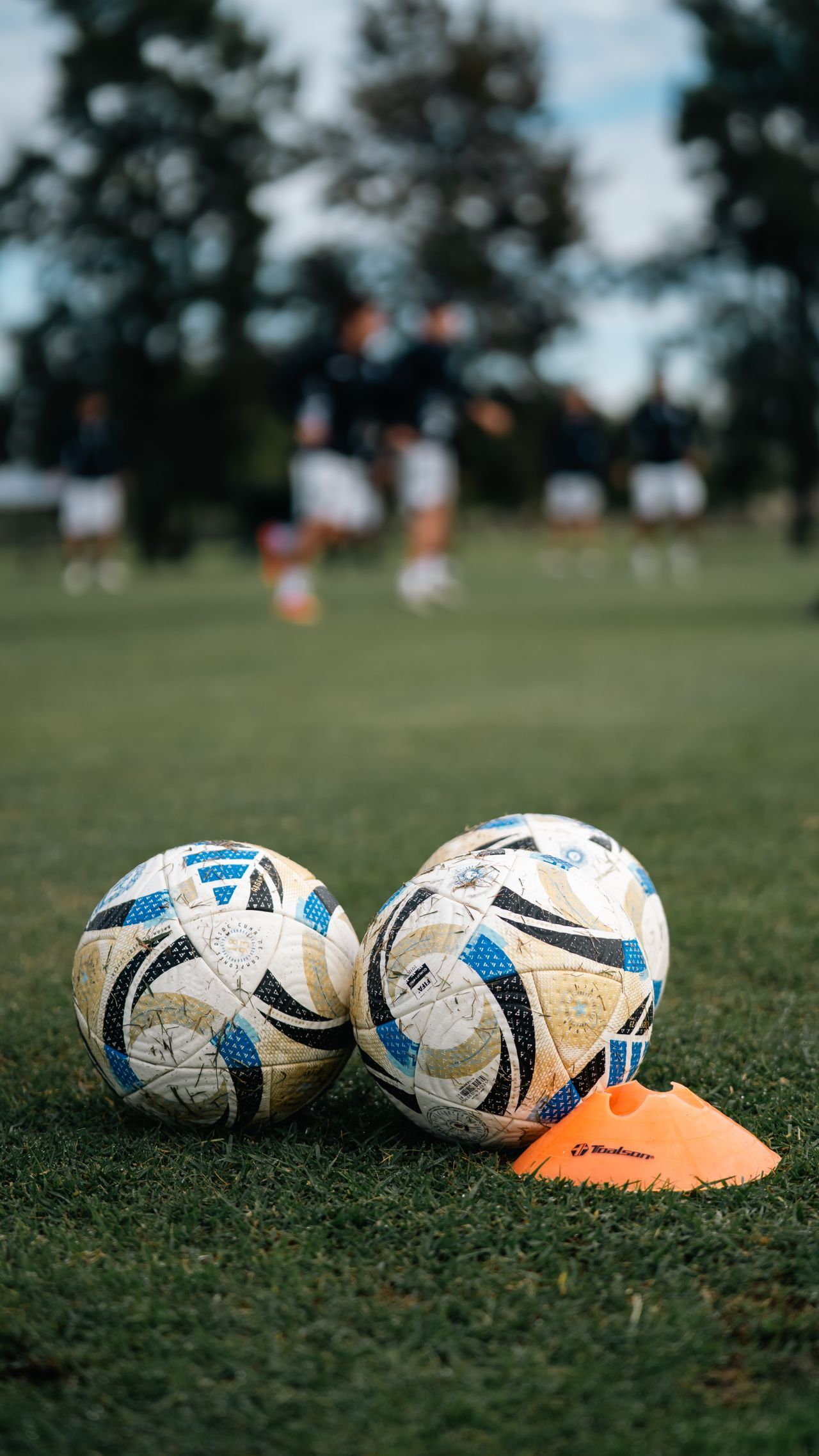
You don't need to know anything about soccer to run this plan. You need a ball, a driveway or any patch of flat ground, and about twenty minutes. Cones are nice; shoes work fine. Your job is not coaching - your job is setting things up, counting out loud, and being impressed. The ball does the teaching.
That last part isn't a pep talk, it's the actual mechanism. Early soccer skill is almost entirely a function of touches - how many times a kid's foot meets the ball. A driveway kid getting a few hundred touches an afternoon, three afternoons a week, is out-training most of what happens at a weekly practice, where much of the hour goes to lines and instructions. You're not the coach. You're the person who makes the touches happen.
Each drill below comes with a "try until" goal - a specific, checkable target so both of you know when a skill is actually landing, instead of guessing. Kids attach hard to these targets. "Try until you get five in a row" turns a chore into a game, and the day they hit a target they've been chasing for a week is a core memory, manufactured on demand, in your driveway.
One more thing before the drills: these six skills are exactly the First Touch skills from Soccer Kickoff Level 1, our free beginner program - same drills, but with short videos of real coaches demonstrating each one, so your kid can see what "inside of the foot" means instead of decoding your description of it. This article works fine on paper. It works better with the videos. Level 1 is free; start it when you're ready.
Drill 1: Juggling (the famous one)
What it is: keeping the ball off the ground with feet, thighs, anything but hands.
How to run it: start easier than you think. Kid drops the ball, lets it bounce once, kicks it up, catches it. That's one. Then: bounce, kick, kick, catch - that's two. Ground-zero beginners can start by juggling with one bounce allowed between every touch. Full no-bounce juggling comes later and arrives on its own.
Try until: three touches in a row without catching (bounces allowed at first, then without). For a total beginner this can take days, which is the point - it's the long-arc goal running in the background of every session.
Parent note: juggling is the skill kids most want, because it's what they've seen. Let them chase it, but don't let a whole session become juggling frustration. Five minutes, then move on.
Drill 2: Inside-foot passing (the most important one)
What it is: pushing the ball with the inside of the foot - the big flat part, not the toe. This is the pass, the most-used touch in all of soccer.
How to run it: stand eight or ten feet apart and pass back and forth. That's the whole drill, and your participation is legal because no skill is required on your end - trap it however you can and roll it back. Watch for one thing only: contact with the inside of the foot, ankle locked, not a toe-poke. If it clacks off the toe and flies at your shins, cheerfully say "inside of the foot!" and continue. That is the complete coaching manual.
Try until: ten passes in a row where the ball comes to you on the ground, reachable without moving more than a step. Then take a step back and reset the count.
Drill 3: Dribbling through cones (or shoes, or water bottles)
What it is: weaving the ball through a line of obstacles using small touches.
How to run it: line up four to six markers, a couple of feet apart. Kid dribbles through the slalom, turns at the end, comes back. The single instruction that matters: small touches - the ball should never get more than a step ahead. Speed is not the goal and should be actively de-emphasized; a slow, controlled run beats a fast one where the ball caroms off every cone.
Try until: three round trips in a row without touching a cone. Then move the cones closer together, which resets the game and quietly increases the difficulty forever.
Drill 4: The laces shot into a wall
What it is: striking the ball with the top of the foot - the shoelaces - which is how real shots are hit. Kids naturally toe-poke; this drill retrains that.
How to run it: find a wall that can take it (garage door counts, subject to household law; a park wall is safer diplomacy). Ball a few steps out. The cues, and there are only two: plant foot lands beside the ball, and contact is on the laces with the toe pointed down. The satisfying thump of a clean laces strike is unmistakable - both of you will hear the difference from a toe-poke immediately, which makes this drill nearly self-teaching.
Try until: five clean laces strikes in a row - judged by sound and by the ball going roughly where they aimed. Chalk a target square on the wall when they're ready to aim, and you've bought another month of engagement.
Drill 5: The weak-foot touch
What it is: everything above, on the other foot. Every kid rapidly develops a favorite foot; every coach spends years undoing the neglect of the other one. Ten minutes a week now is worth entire seasons later.
How to run it: don't make it a separate ordeal - kids experience weak-foot work as pure frustration if it's framed as its own event. Instead, tax the drills they already like: last ten passes of Drill 2, left foot only. One slalom round trip, wrong foot. Two wall strikes. Keep it short, keep it matter-of-fact, expect it to look terrible, and treat any success like a small miracle, because to their nervous system it is.
Try until: five inside-foot passes in a row with the weak foot that reach you on the ground. That's it. The bar is low on purpose; the habit is the victory.
Drill 6: Thirty seconds of close control
What it is: the finisher. Kid keeps the ball glued to their feet for thirty seconds inside a small box - touches every step, rolling it, tapping it side to side, turning - while you count down out loud.
How to run it: mark a box maybe six feet square with the cones you already have. Ball stays inside, feet keep moving, as many touches as possible until you hit zero. Your countdown is the whole apparatus - kids will do nearly anything against a parent counting backward. This drill compresses more touches per second than anything else on the list, which is why it closes every session.
Try until: thirty seconds with the ball never leaving the box, twice in a row. Then shrink the box.
Putting it together: the twenty-minute session
A full session is simply the six drills in order - five minutes of juggling attempts, five of passing, four of slalom, four of wall strikes with the weak-foot tax sprinkled through, and thirty-second close-control rounds to finish. Two or three sessions a week is plenty. On the days between, the best training is no training: just leave the ball where they trip over it, and let unstructured messing-around do its quiet work.
Expect the progress to be lumpy, because it will be. A kid who hit ten passes in a row on Tuesday will shank six straight on Thursday and declare the drill broken. This is how motor learning works - skills consolidate unevenly, and the bad day is usually the day before the breakthrough. Your job on the bad days is exactly one move: shrink the target until they win something ("let's just get three"), end on that win, and put the ball away. Never end a session on failure. The kid who ends on a win comes back tomorrow; the kid marched through frustration to fill the full twenty minutes starts finding reasons to stay inside.
And hold the frame, because it's the thing that makes all of this function: you are not the coach. You are not evaluating. The one sentence a driveway parent should say more than any other is "do that again, that looked cool." Kids quit when the driveway starts feeling like a job interview. They stay - for years - when it feels like the place where a parent counts down from thirty and cheers.
When your kid starts hitting the "try until" targets, they're ready for the real version of this: Soccer Kickoff Level 1, free, with coach videos for every one of these six skills - the same drills you've been running, demonstrated properly, with the next levels waiting after. Set up the cones, press play on the first video, and let the coach take over the part you were never supposed to do anyway. You just count.