
The Field Guide to "Atlanta Stadium": Every World Cup Match, Decoded for Parents
Every 2026 World Cup match at Atlanta Stadium, decoded for families - schedule, comfort, and the logistics that make or break the day.
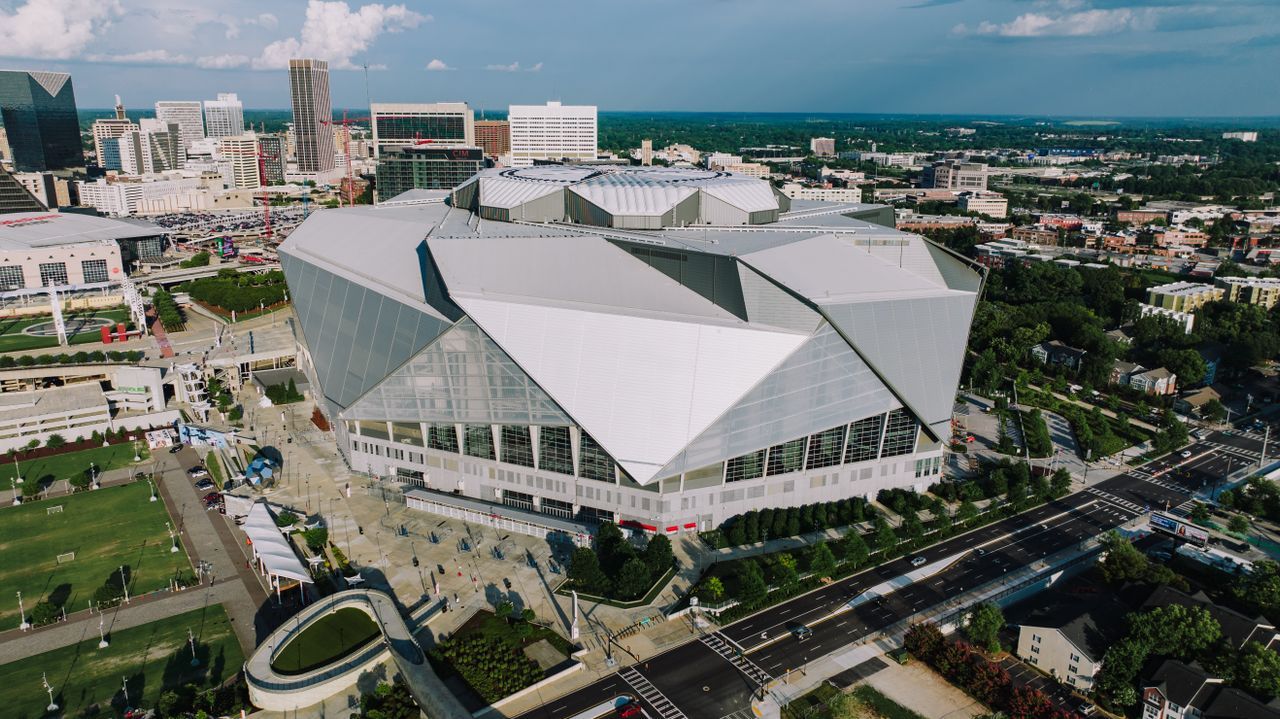
Here's something most Atlanta parents haven't caught yet: the building you know as Mercedes-Benz Stadium isn't called that this summer. FIFA doesn't allow sponsor names on World Cup venues, so for the duration of the tournament it's simply "Atlanta Stadium." The signage swap already happened in late May. If you've been Googling "Mercedes-Benz Stadium World Cup tickets" and getting confused results, that's why. Same roof, same seats, same Chick-fil-A that's closed on Sundays - different name on the outside.
This matters more than it sounds. Your tickets, the official FIFA app, wayfinding signs downtown, and half the news coverage will say "Atlanta Stadium." The other half of the internet, your phone's map app, and everyone you know will still say "the Benz." Both are correct. Now you know, and you can stop second-guessing whether you bought tickets to the right building.
This guide is the hub for everything we've written about taking kids to World Cup matches in Atlanta. Below: the full match schedule, what each date means for your family's planning, and links to the deep-dive pieces on bags, transit, and everything else that can quietly wreck a match day if you don't see it coming.
Eight matches. Thirty-one days. One very big deal.
Atlanta drew one of the strongest slates of any host city - eight matches stretching from mid-June to mid-July, ending with a semifinal. Officials expect more than $500 million in economic impact, and city leaders have called it one of the largest sporting events Atlanta has ever hosted. Bigger than the Super Bowl, because it isn't one day. It's a month.
Here's the schedule, translated from FIFA-speak into parent-speak.
The group stage: June 15, 18, 21, 24, and 27
Five matches in thirteen days. Group-stage games are the most family-friendly entry point to the tournament for a few reasons.
First, tickets are the most attainable. Demand for a random group match between two mid-table teams is nothing like demand for a knockout game, and if you're taking a seven-year-old to their first professional soccer match, the seven-year-old does not care about FIFA rankings. They care about the noise, the flags, and the giant screen.
Second, the stakes are lower for you, too. If your kid melts down in the 60th minute of a group game and you have to leave early, you haven't burned once-in-a-lifetime tickets. Think of the group stage as the shallow end.
Third, the atmosphere is arguably better for kids. Group matches draw huge traveling supporter groups - drums, songs, face paint, entire sections in matching colors. For a child, that spectacle is the World Cup. The actual scoreline is background noise.
A practical note on those dates: June 15 is a Monday, and the matches spread across weekdays and weekends. If you're choosing one, check the day of the week before you check the teams. A weekend match means no school-night bedtime math and no fighting rush hour on top of match traffic.
Round of 32: July 1
The knockout rounds begin, and this is where the tournament changes character. Win or go home. Extra time and penalty shootouts become possible, which means two things for parents: the match can run 45 minutes to an hour longer than scheduled, and the tension in the building goes up several notches.
Penalty shootouts, for what it's worth, are the single most kid-captivating event in soccer. If your child watches one live, you will be setting up cones in the driveway by the weekend. Plan for the longer evening; don't promise anyone they'll be in bed by nine.
Round of 16: July 7
Same knockout logic, bigger teams, hotter tickets. By this point in the tournament you'll know which nations are coming through Atlanta, and if one of them happens to be the United States or a global heavyweight, expect the city to feel it - watch parties everywhere, jerseys on every block, and a downtown that's fun but full. If you're bringing kids to this one, the logistics pieces linked below stop being helpful and start being essential.
The semifinal: July 15, 3 p.m.
This is the crown jewel. Only two cities in the country host a semifinal, and Atlanta is one of them. Four teams left in the entire world, and two of them will be playing in downtown Atlanta on a Wednesday afternoon.
The 3 p.m. kickoff is a gift and a challenge. The gift: it's a day game, so even a long match with extra time has your family home for dinner, and younger kids aren't fighting sleep in the 85th minute. The challenge: it's a Wednesday in mid-July, so you're taking off work, camp pickup needs arranging, and every other family in the building did the same math. This is the match to plan earliest and most carefully.
And to be clear about what your kid would be watching: whoever plays in this match is four days from possibly winning the World Cup. Children remember this stuff for the rest of their lives. Ask anyone who was a kid in a host city in 1994.
"But will my kids actually be comfortable?"
Short answer: inside the building, yes. Atlanta Stadium has a retractable roof and full climate control, and for World Cup matches you should expect a controlled indoor environment. July in Atlanta is brutal - but the brutal part is the walk to the stadium, the wait outside the gates, and the trip home, not the seats themselves. Once you're through security, you're in air conditioning watching soccer in comfort while it's 95 degrees outside.
That flips the usual planning logic. You don't need to prepare your family for three hours of heat in the stands. You need to prepare them for the 30 to 60 minutes of outdoor time on either side of the match: the transit ride or parking hike, the security line, the walk to your gate. Hats, water for the journey, sunscreen for a day match, and a plan for getting inside efficiently. Our transit and bag-policy guides below exist mostly to shrink that outdoor window.
The stuff that actually ruins match days (and where we've covered it)
Nobody's World Cup memory is wrecked by the soccer. It's wrecked by the diaper bag confiscated at security, the ninety minutes circling for parking, or the meltdown in a rideshare pickup zone a ten-minute walk from the gates. We've written a dedicated piece for each of these, because each one deserves more than a paragraph.
The clear bag policy - read this one first. The stadium requires clear bags with strict size limits, and the rule that catches parents off guard is that diaper bags have to be clear too. There are also quieter rules - no seat cushions or booster seats, limits on camera lenses - that can turn a gate check into a bad start. Our full breakdown covers every rule, the one small non-clear clutch you're allowed, and the bag-check trucks outside the stadium that serve as your safety valve if you show up with the wrong bag.
MARTA or drive - the honest answer is "let MARTA drive," and we show the math: a couple of dollars a ride versus what official lots charge on match day, which can run into the dozens of dollars or worse. But the answer really does depend on where you live and how many kids you're moving, so we built a neighborhood-by-neighborhood decision tree. It also covers the change that trips up even lifelong Atlantans: MARTA's fare system was overhauled, old Breeze cards no longer work, and you now tap a bank card or phone at the gate.
Getting home - buried in the transit piece but worth flagging here: rideshares can't reach the stadium doors on match days. The city set up designated pickup zones roughly a ten-minute walk away, and roads around the stadium close hours before kickoff. The trip home with tired kids is the leg families under-plan. Read that section even if you're driving.
A parent's one-page cheat sheet
If you read nothing else, here's the tournament in five lines. The stadium is called Atlanta Stadium this summer, even though your map app disagrees. Group-stage matches on June 15, 18, 21, 24, and 27 are your lowest-stakes, most kid-friendly entry point. Knockout matches on July 1 and July 7 run longer and hotter - plan for extra time. The July 15 semifinal at 3 p.m. is the historic one: a day game, a Wednesday, and worth taking off work for. And the seats are air conditioned, so plan for the journey, not the stands.
One more thing before you go
A month of World Cup soccer in your city does something predictable to children: somewhere around the second match they watch, they announce they want to play. That moment is the actual reason this site exists. When it happens, we've got a guide for exactly what to do next - from free skills your kid can start in the driveway today, to an honest, opinionated directory of Atlanta soccer camps where we'll tell you which programs are serious, which are glorified daycare, and which one fits the kid you actually have.
The match is the spark. What you do with it is the fun part.
Want the rest of the summer's guides as they publish - camp reviews, match-week logistics updates, and training plans for brand-new players? Join the newsletter. It's one email, it's useful, and it's written by people who will be standing in the same security line you are.